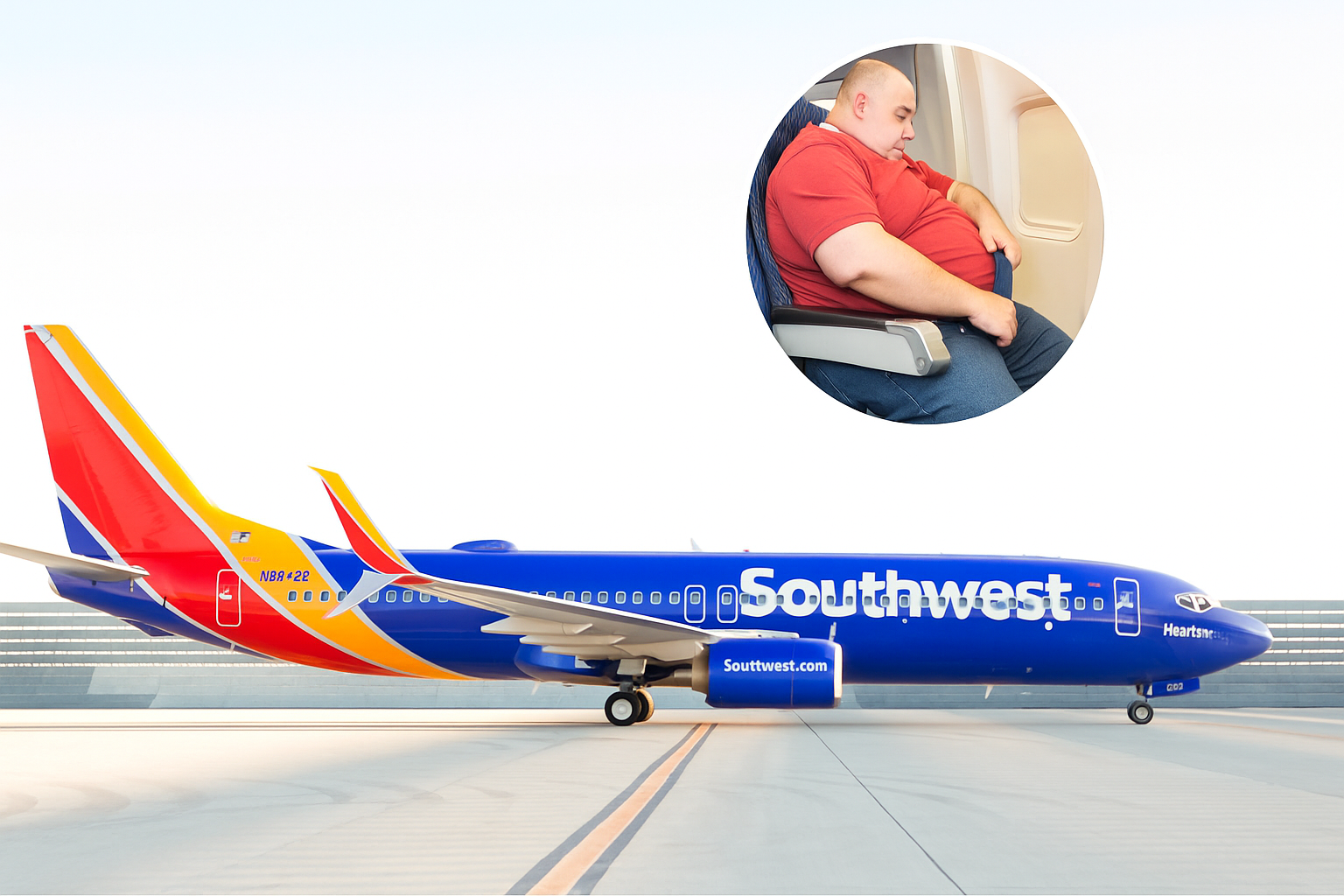
Southwest Airlines will introduce major changes to its Customer of Size Policy starting January 27, 2026. Passengers who cannot fit comfortably in one seat will now need to purchase an additional seat when booking their ticket.
A Shift From Previous Rules
For years, Southwest offered one of the most flexible policies in the industry. Larger passengers could often request an extra seat at no cost if space was available. That option will soon disappear. Beginning in 2026, travelers must buy the extra seat in advance.
Refunds may still be possible, but only under certain conditions. Both seats must be purchased in the same fare class, and the flight cannot be sold out. If those criteria are met, passengers can apply for reimbursement of the second seat.
Why the Change Matters
Other major U.S. airlines already require passengers of size to purchase additional seating. Southwest previously stood apart by emphasizing customer-first policies. This update brings the company in line with competitors while aiming to reduce conflicts over space on crowded flights.
Analysts point out that high load factors leave airlines with little flexibility. “Southwest is trying to balance comfort with profitability,” one aviation expert noted. “The key will be enforcing the policy consistently.”
Reactions From Travelers
The announcement has sparked mixed responses. Supporters argue that the rule ensures fairness for all passengers and removes uncertainty at boarding. Critics view it as an unnecessary burden that singles out larger travelers.
Consumer advocates warn that inconsistent enforcement could lead to disputes. At the same time, industry observers believe the Customer of Size Policy reflects broader trends in air travel, where rising costs and high demand push airlines to standardize rules.
Looking Ahead
Southwest positions the update as part of its effort to maintain comfort and efficiency as travel demand rises. Whether travelers see it as fair or discriminatory, the rule marks a significant shift in how the airline manages passenger space. By early 2026, flyers will need to plan ahead and adjust to this new reality in U.S. air travel.




Leave a Reply